

Buying jewelry online can make ring sizing feel uncertain. A careful measurement, a check of the knuckle, and the seller’s own chart give you a more systematic starting point for find ring size.
This approach moves beyond wrapping string around a finger once and treating the result as final. Measure carefully, check the knuckle, and compare the result with the product’s stated sizing information.
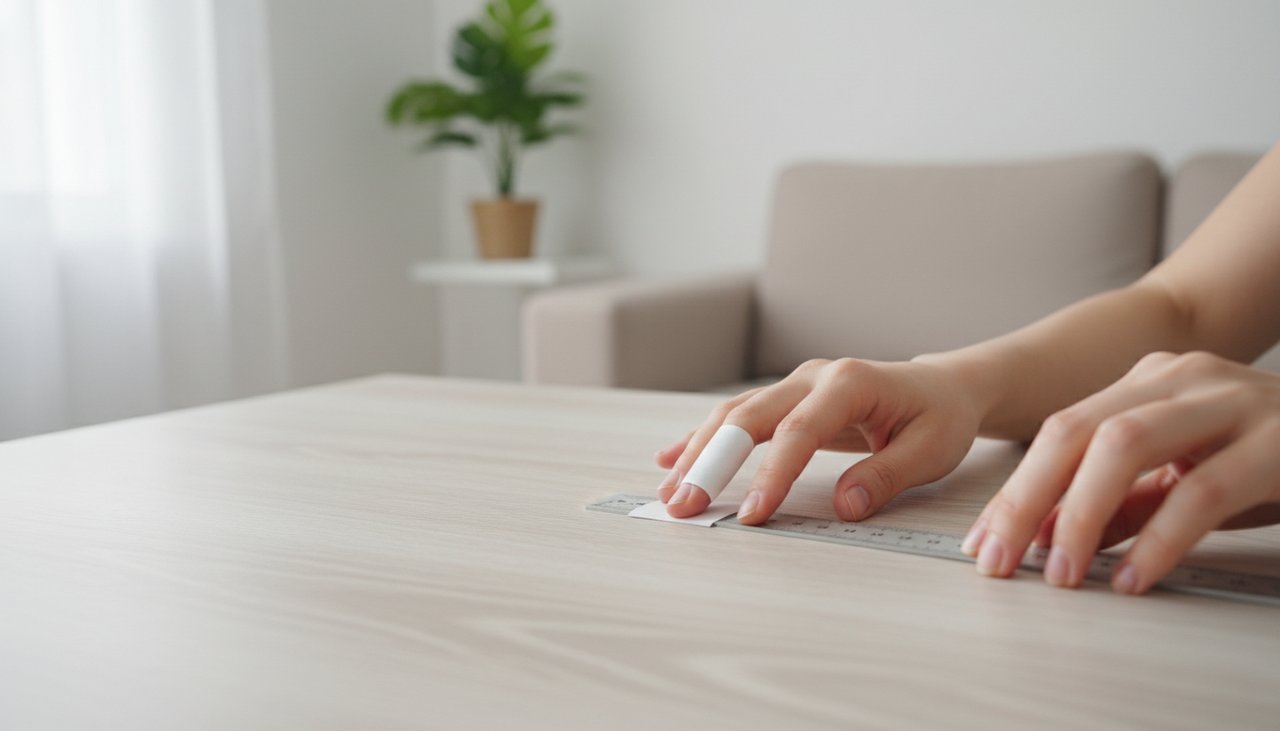
The String or Paper Method
Many people start with a strip of paper or a piece of string because these materials are readily available. While convenient, this method is best used as a rough starting point — string can stretch and paper often twists, making precise measurement difficult with one hand.
If this is the method you have available, follow the steps in order:
- Cut a thin strip of paper or a piece of string, about 10cm long.
- Wrap it snugly around the base of your finger — firm contact, but not tight enough to indent the skin.
- Mark the exact point where the strip overlaps itself.
- Lay it flat on a hard surface and measure the length in millimeters.
- Compare that number against a standard ring size chart.
Most importantly, this technique often overlooks the knuckle. A ring is a rigid metal band that must pass over the widest part of your finger joint before it rests at the base. Measuring only the softest part of the finger can result in a ring that is impossible to put on.
When your measurement lands between two entries on a standard ring size chart, compare the result with the widest part of your finger. The ring needs to pass over the joint, so a noticeably wider knuckle may mean the larger option is worth checking. If the two measurements are close, compare the chart with a ring that already fits rather than treating rounding as a universal rule.
The Printable Sizer Method
A printable paper sizer offers a significant improvement in accuracy. Most reputable jewelers provide PDF templates that you can print and cut out to create a structured measuring tool. This method mimics the actual shape of a ring more closely than a simple piece of string.
The most critical step occurs before you begin cutting. You must ensure your printer settings are locked at exactly 100% scale. If your computer automatically fits the image to the page borders, the resulting measurement will be useless. Print on cardstock rather than standard A4 paper — the added rigidity keeps the strip from bending when you wrap it, which is one of the more common sources of error in home measurement.
If a printable template includes a calibration guide, compare it with the referenced object before using the chart. If it does not align with the printed lines, adjust the print settings or use another measuring method.
Testing the Fit
A measurement is just a number on a chart. Consider the finger joint and the intended wearing position, while remembering that ring profiles differ. A home measurement is only a starting point.
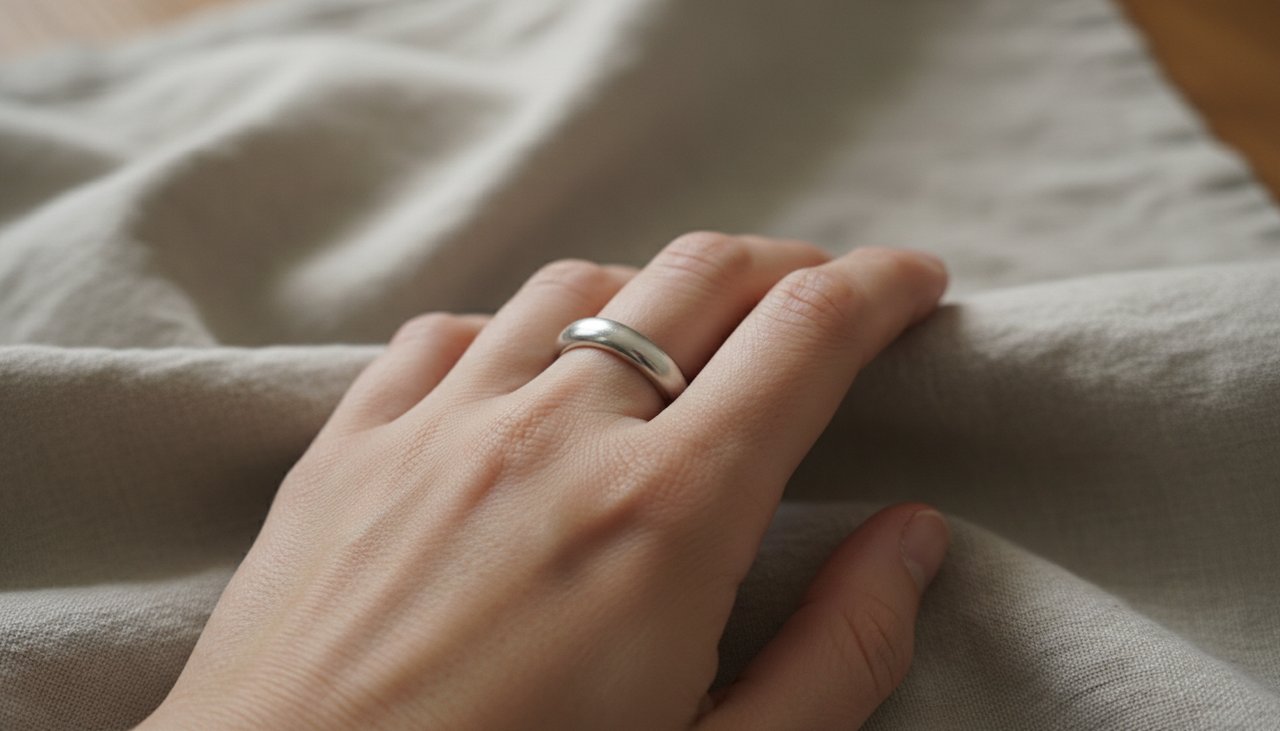
If a ring is difficult to put on or remove, pause and compare the measurement with the seller’s size chart or seek help from a jeweler rather than assuming the chart is wrong.
If you are using a plastic sizer at home, move your hand normally and check whether the sizer stays in place without pinching. A quick home check can reveal an obvious mismatch, but it cannot reproduce every ring shape or activity. Confirm an uncertain result against the maker’s chart.
A proper fit balances security at the knuckle with comfortable contact at the base of your finger.
The Final Sizing Checklist
Finger size is not static; it can vary with temperature, activity, and time of day. Measure on more than one occasion and record the result instead of relying on a single reading. If a ring will be worn in a different climate or during a particular activity, allow for that uncertainty.
Be aware of several factors that can alter your results:
- Cold weather causes fingers to temporarily shrink.
- High heat or humidity leads to noticeable swelling.
- Salty meals or exercise can expand tissue size.
- Fit alone does not determine whether a finger changes color. That can depend on the metal, plating, moisture, products on the skin, and individual reaction. If you are concerned about rings green finger, check the product’s stated material and stop wearing it if irritation develops.
- Bands with a rounded interior can fit differently from flat-inside bands. Follow the seller’s guidance rather than assuming a fixed size adjustment.
- Band width affects how much metal contacts the finger. Wider bands may feel different from narrow bands, so compare the stated dimensions with a ring you already wear.
The internal profile of the ring also matters. A comfort fit design allows the metal to slide over the knuckle more easily than a flat-inside band. Always check the product description to see which profile the jeweler uses.
Buying a Ring as a Gift
When the ring is meant to be a surprise, avoid guessing from height, weight, or clothing size. Those clues do not translate reliably to fingers. A better method is to borrow a ring the person already wears on the same finger and measure its inner diameter with a ruler or calipers.
If you cannot borrow the ring, place it on paper and trace the inside circle as cleanly as possible. This will not be as accurate as a jeweler’s mandrel, but it gives you a useful starting point. For a high-stakes gift, choose a design that can be resized and confirm the return or exchange policy before buying.
Circumference to Ring Size
Once you have your measurement in millimeters, use this table as a rough reference for common US / Canada and EU sizes based on inner circumference. UK, Australian, Japanese, Chinese, Korean, and other systems may use different conventions, so check the seller’s own conversion chart before ordering.
| Circumference (mm) | Diameter (mm) | US / Canada | EU circumference |
|---|---|---|---|
| 44 | 14.0 | 3 | 44 |
| 47 | 15.0 | 4 | 47 |
| 49 | 15.6 | 5 | 49 |
| 51 | 16.2 | 5.5 | 51 |
| 52 | 16.6 | 6 | 52 |
| 54 | 17.2 | 7 | 54 |
| 57 | 18.1 | 8 | 57 |
| 60 | 19.1 | 9 | 60 |
| 62 | 19.7 | 10 | 62 |
If your number falls between two rows, compare both the finger base and knuckle with the seller’s chart. Band width and interior profile can change how a ring feels, so do not treat the table as a universal rule.
Making Your Final Choice
Once you understand these physical cues and environmental variables, choosing a size becomes less abstract. You are comparing measurement, knuckle clearance, band width, and the seller’s stated profile, while allowing for some uncertainty.
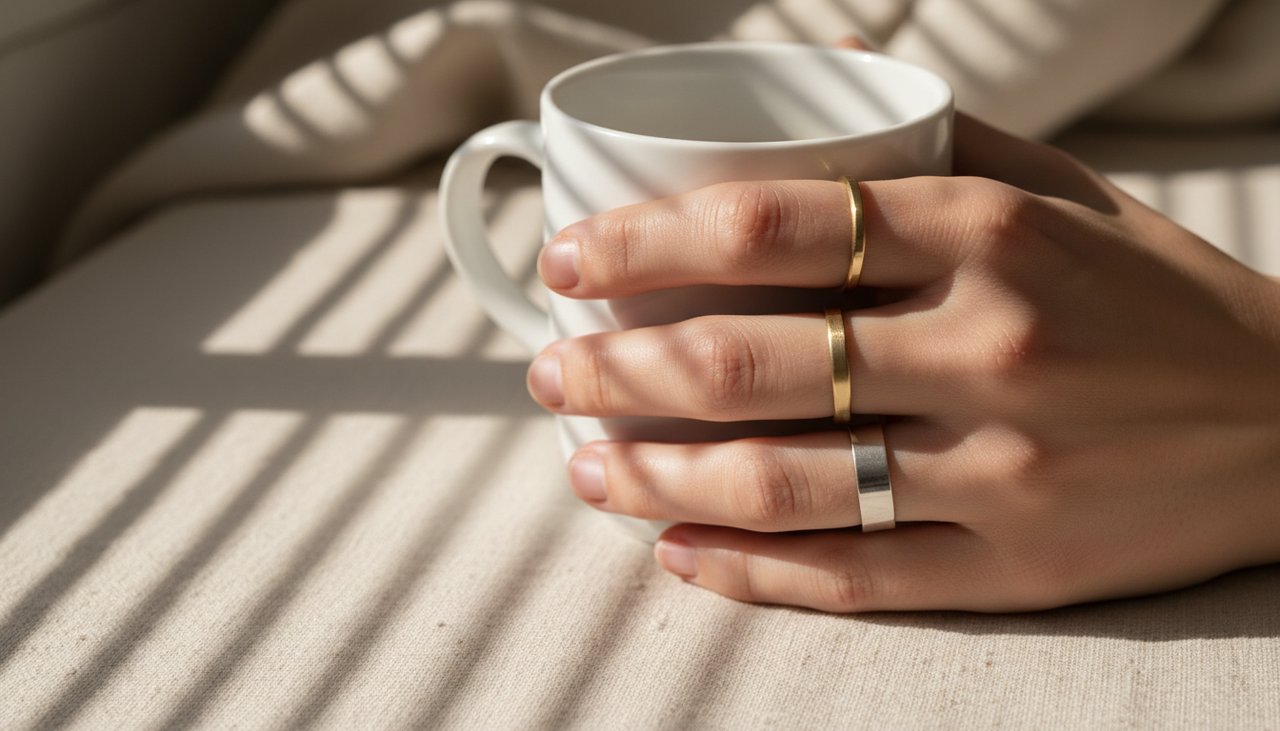
If your knuckle is significantly wider than your finger base, the printable sizer can give you a more useful physical check of how a band may clear the joint. If your fingers are fairly uniform in width, the string or paper method can provide a starting point, but it is not a guarantee of the final fit. Confirm the result with the seller’s chart. Once you have chosen a size, learning how to clean jewelry at home can help you plan routine care without assuming every piece uses the same method.