

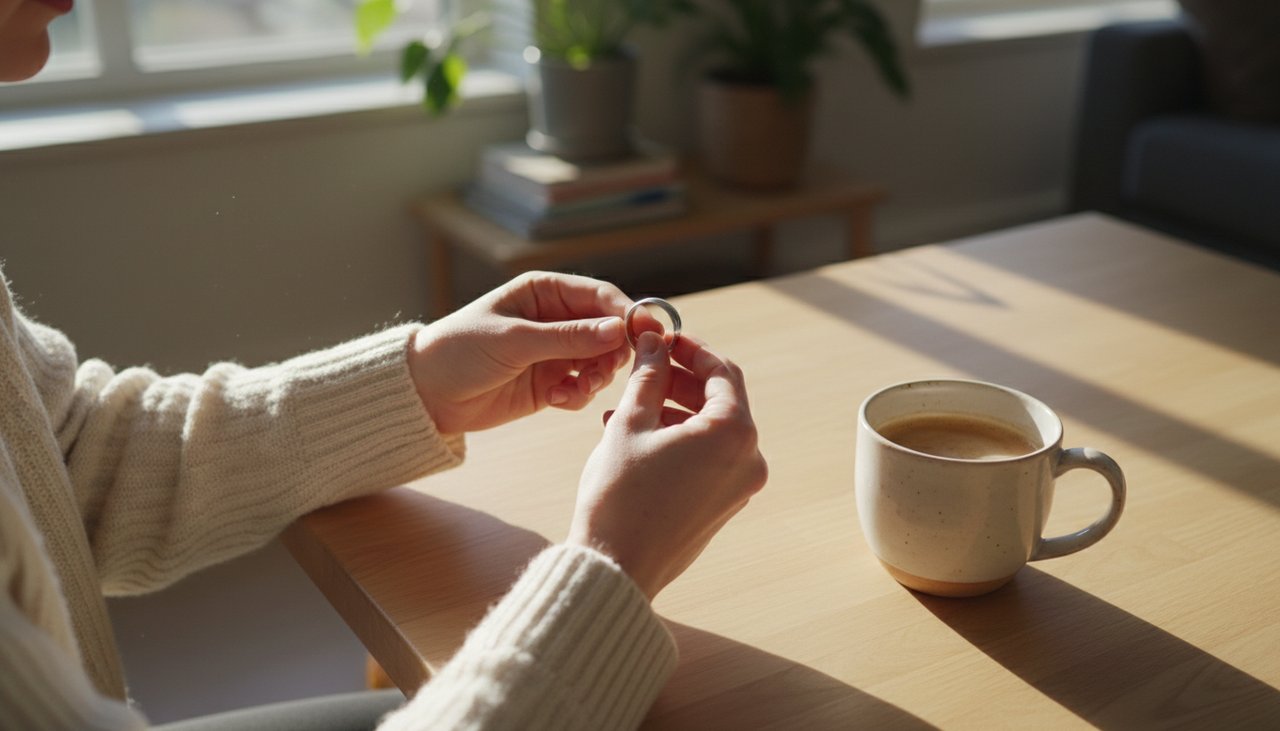
My favorite ring looked dull halfway through my coffee this morning. Weeks of hand lotion, dust, and ordinary wear had left a light film across the surface. A short cleaning session afterward made a noticeable difference, though how much a piece improves depends on its material, its finish, and how much buildup has settled into it over time. Learning how to clean jewelry at home doesn’t require professional equipment — just patience, and the right method for what you’re actually wearing.
It’s tempting to reach for the strongest cleaner under the sink, but that’s usually a mistake. Your kitchen isn’t a lab, and a piece with an unfamiliar finish, plating, or gemstone shouldn’t be the test subject. Many cleaning shortcuts shared online rely on abrasive pastes or harsh chemicals that scratch surfaces or strip finishes away, sometimes without any obvious sign until the damage is already done.
Below are a few gentle habits I rely on for pieces I know well, using simple household items. The goal is gentle maintenance, not a fix-all routine — and for anything with a finish, plating, or gemstone you’re unsure about, the safest step is checking the maker’s care instructions or asking a jeweler before trying anything at home.
A Gentle Soak for Solid Metals and Durable Gemstones
For pieces made of solid gold, platinum, or set with durable gemstones like diamonds or sapphires, warm water and mild soap are usually enough. If you’re not sure how a particular stone or setting will react, it’s worth checking with the jeweler who sold it or the maker’s care guide before soaking it. This method is especially handy when you stack bracelets or wear several rings at once, since it cleans different metals side by side without singling any one out. I keep a small glass bowl set aside just for this — warm water and a few drops of mild dish soap are all it takes.
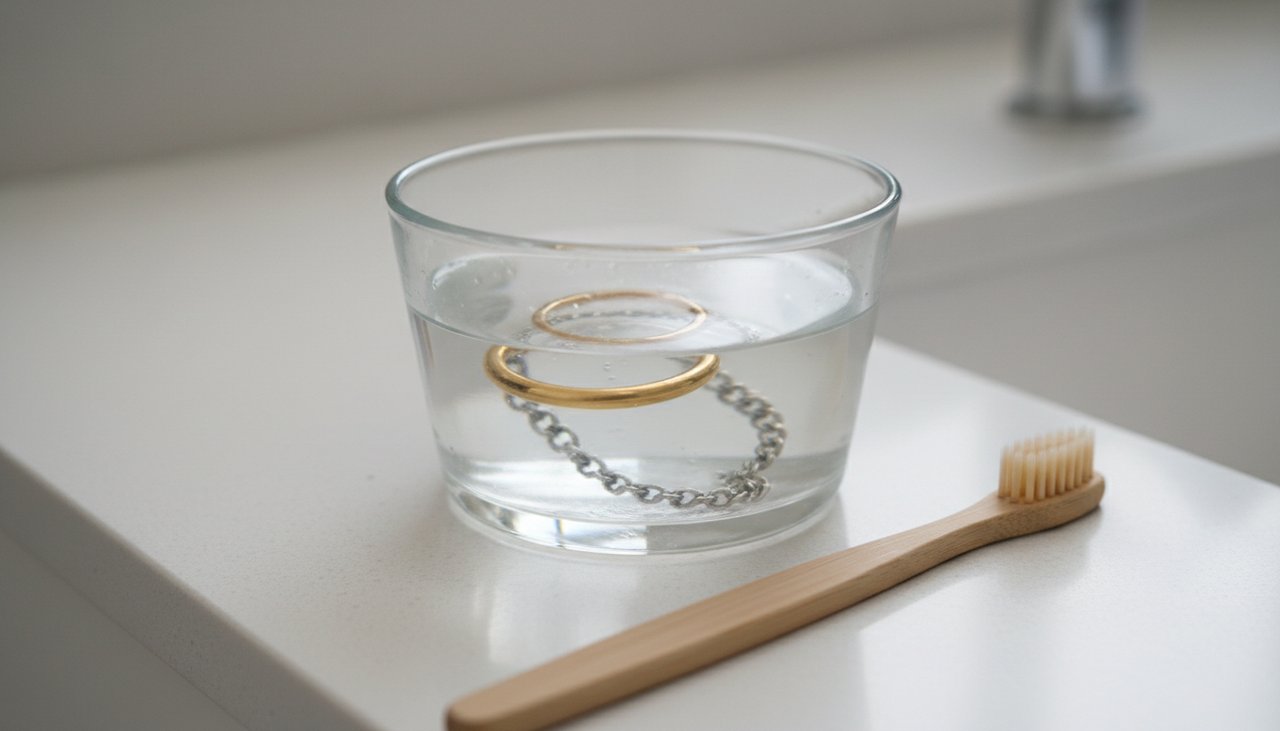
Drop the items in and let them sit for several minutes. That’s usually enough time for the soap to loosen everyday oils and grime that collect in small crevices, so there’s no need for an extended soak.
- Take the items out one at a time once the soak is done.
- Use an extra-soft toothbrush to gently sweep around the prongs and the underside of the stones, keeping the brushing light throughout. If you’re unsure how durable a particular gemstone is, brush the metal only and avoid the stone’s surface — some materials can be marked even by a soft-bristle brush.
- Rinse each piece under a gentle stream of clean water.
- Pat them dry with a clean, lint-free cloth.
Plug the sink drain before you start rinsing — a small step that keeps a quick cleaning session from turning into a call to a plumber over a piece that slipped down the drain. While your rings are off anyway, it’s also a good moment to find ring size consistency if one has started feeling looser or tighter than it used to.
Caring for Tarnished Silver
Sterling silver naturally tarnishes as it reacts with sulfur in the air. For plain, unadorned silver bands, some people rely on a foil-and-baking-soda soak — a chemical reaction rather than abrasive scrubbing — as one way to help keep silver jewelry clean. It isn’t something I’d recommend for every piece, though. Silver with gemstones, unusual plating, or a finish you don’t fully recognize is better off with a gentler approach or a trip to a jeweler, since a reaction that behaves predictably on bare metal can act differently around stones, adhesives, or coatings.
The general idea is simple: a shallow foil-lined dish, warm water, and a mild alkaline ingredient like baking soda create a reaction that draws tarnish away from bare silver. I won’t give exact measurements here, because how much is appropriate really depends on the piece in front of you, and a maker’s care instructions or a local jeweler will judge that far better than a generic ratio would.
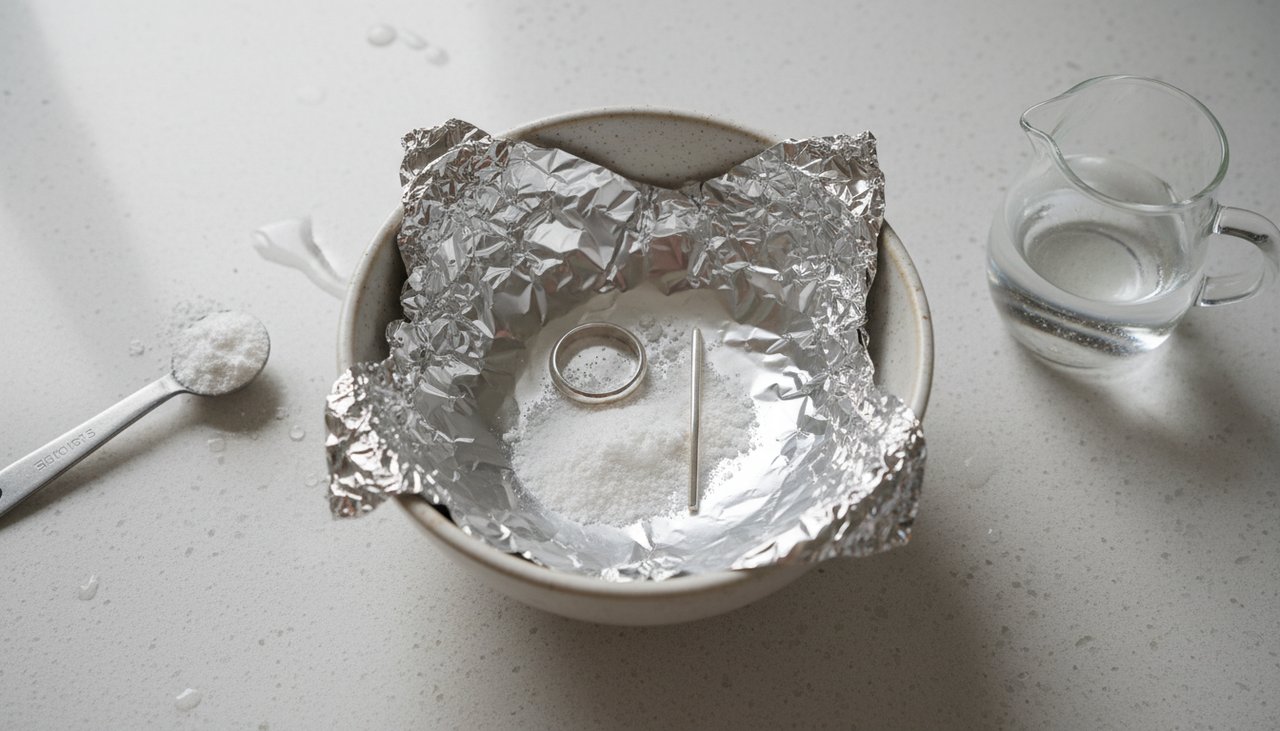
If you do try it, keep the soak brief and check on the piece often — a faint sulfur smell during the process isn’t unusual. Skip this method entirely for silver with intentional dark oxidation built into the design, anything set with gemstones, or plated pieces. Removing tarnish chemically in those cases can also strip away detailing or a finish that was never meant to be uniformly shiny in the first place.
The Wipe Only Rule for Plated Jewelry
Gold-plated and vermeil pieces call for a different approach altogether. The plating is a thin layer over a base metal, and soaking it can let moisture work its way underneath, which contributes to that layer eventually wearing thin or peeling. Keeping the plating intact also matters for comfort, since exposed base metal is often behind the kind of rings green finger marks people notice on well-worn pieces.
For these pieces I stick to a wipe-only routine. A soft microfiber cloth, barely dampened at one corner with a little diluted soap, is a cautious starting point, and it keeps standing water away from the plating.
Wipe the surface gently without pressing hard, then go over it right away with a dry section of the same cloth to catch any leftover moisture. Stop if the color or finish begins to change.
What Porous Gems Should Never Touch
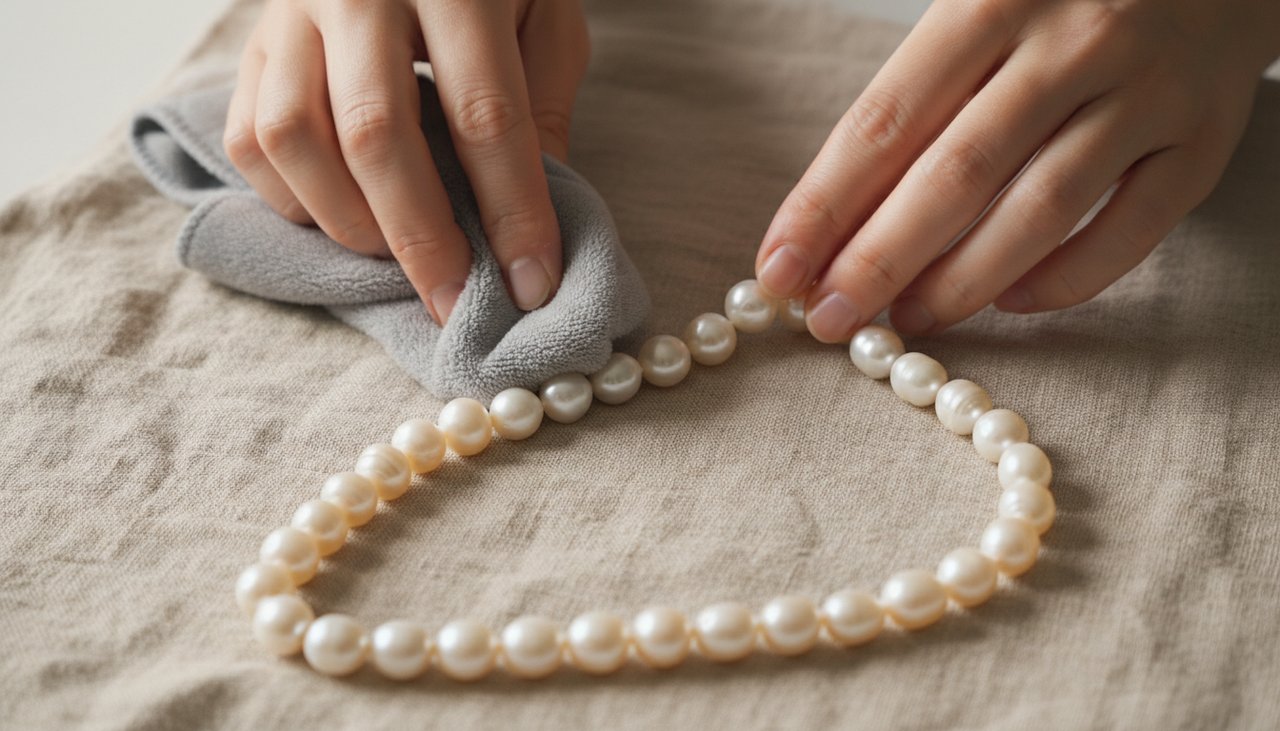
Pearls, turquoise, amber, and opals behave differently from hard gemstones and metal. Many of these materials are porous enough to absorb liquids rather than simply repel them, so whatever touches them can end up staying in them.
These materials also tend to be softer and easier to mark than faceted gemstones or polished metal, so cleaning approaches that work well elsewhere aren’t automatically suitable here. When a piece combines one of these stones with an unfamiliar setting, treatment, or age, checking with whoever sold it, or a jeweler experienced with that material, is worth the extra step before doing anything at all.
Because of that absorbency, certain common household items can cause damage that may be difficult to reverse. Keep these materials away from pearls, turquoise, amber, and opals:
- Ammonia or window cleaners
- Rubbing alcohol or hand sanitizers
- Toothpaste and heavy baking soda pastes
- Bleach or chlorine products
For everyday care, a slightly damp, soft cloth followed by prompt drying is generally the gentler option for these stones. If a piece looks dull, discolored, or shows visible damage, that’s a better reason to bring it to a jeweler than to keep experimenting at home, since porous stones don’t always respond predictably to trial and error.
A Quick Spot Test for Peace of Mind
If you come across a vintage piece and aren’t sure what it’s made of, resist the urge to jump straight into cleaning it. A spot test first is the safer habit, and it can catch a problem before it spreads across the whole piece.
Choose an inconspicuous spot, such as the inside of a ring band or the back of a pendant, and dab a cotton swab dipped in a mild soap solution onto it. Give it a few minutes, then check what happened.
When in doubt, do nothing.
If the swab picks up any color, or the surface looks different afterward, stop right there and dry the piece off. An unknown piece with a small smudge left on it is in much better shape than one that’s been stripped, discolored, or scratched by guessing your way through a method that wasn’t right for it. When you can’t identify the material with confidence, a jeweler or the original maker’s care guidance is a safer bet than continuing to test at home.
Most jewelry follows a similar logic once you know what you’re working with: mild soap for solid metals and durable gemstones, wipe-only for plated surfaces, and nothing wet for porous gems like pearls or turquoise. For anything else — an unfamiliar finish, an antique piece, or a stone you can’t identify — the spot test, the maker’s instructions, or a professional cleaning are all safer starting points than guessing.