

The metal hanger makes a sharp, rhythmic scraping sound against the rod. It is 7:42 AM.
A hand moves through a dense wall of fabric — silk, wool, and synthetic blends — pushing aside a beaded top that hasn’t caught the light in years. On the nightstand, the digital clock flickers to 7:43.
Standing in front of a full closet, sorting through options at that hour is a familiar scene for a lot of people. This piece walks through one way to simplify that morning: building a small, repeatable office outfit formula, and treating jewelry as one optional, low-effort finishing touch rather than a daily puzzle.
Full Closet
Rows of garments hang in tight formation, some still bearing the plastic dry-cleaning sheaths that crinkle at the slightest touch. A patterned skirt with sharp, geometric lines sits next to a blazer with structured shoulders meant for an event that never happened.
Some of these pieces were bought for a different routine — evenings out, occasional events — and don’t have an obvious place in a regular workday. A closet like that can end up holding a lot of items that rarely get chosen, simply because each one adds another decision to make before leaving the house.

A large, varied wardrobe isn’t a problem by itself — but if getting dressed for work regularly feels like extra friction, narrowing the range of choices for that one context is one way to address it.
Narrowing the Choices
Picture a morning where several outfits end up back on the bed or the floor — linen trousers, a sweater, a dress — none of them quite settled on. That kind of back-and-forth is common enough that it’s worth planning around rather than repeating every day.
One option is to set aside a smaller group of pieces specifically for work: a pair of trousers, a shirt, done. The point isn’t that this exact pairing is correct for every job or every person — it’s that having a short list of pre-approved combinations removes some of the daily back-and-forth.
Before adopting this kind of routine, it’s worth checking your own workplace’s dress code or general norms, since “simple and repeatable” looks different across offices, industries, and roles.
Building a Small Office Formula
One approach is to narrow the closet down to a limited color range — navy, grey, black, white, or whatever set already works together in your existing wardrobe — so that most tops and bottoms can be paired without much thought. That’s the basic idea behind a small, repeatable office capsule wardrobe: fewer combinations to evaluate, not necessarily fewer clothes overall.
When the palette is limited enough, most tops pulled from the closet will reasonably match most bottoms. That’s the part of the system doing the actual work — not any single item. To simplify further, some people also settle on a default approach to jewelry for a black outfit so it stops being a separate decision each morning.
Fabric choice is a personal and practical consideration here too — some people prefer materials that pack or travel with fewer wrinkles, such as certain wool blends, though how any given fabric performs will depend on the specific item and how it’s cared for.
A basic formula might look something like this, adjusted to fit what you already own and wear:
- A small number of trousers in neutral, easily-paired tones
- A handful of shirts in colors that work with those trousers
- A sweater or two for layering
- One blazer or jacket that pairs with most of the bottoms in rotation
- A color palette narrow enough that most combinations work without much thought
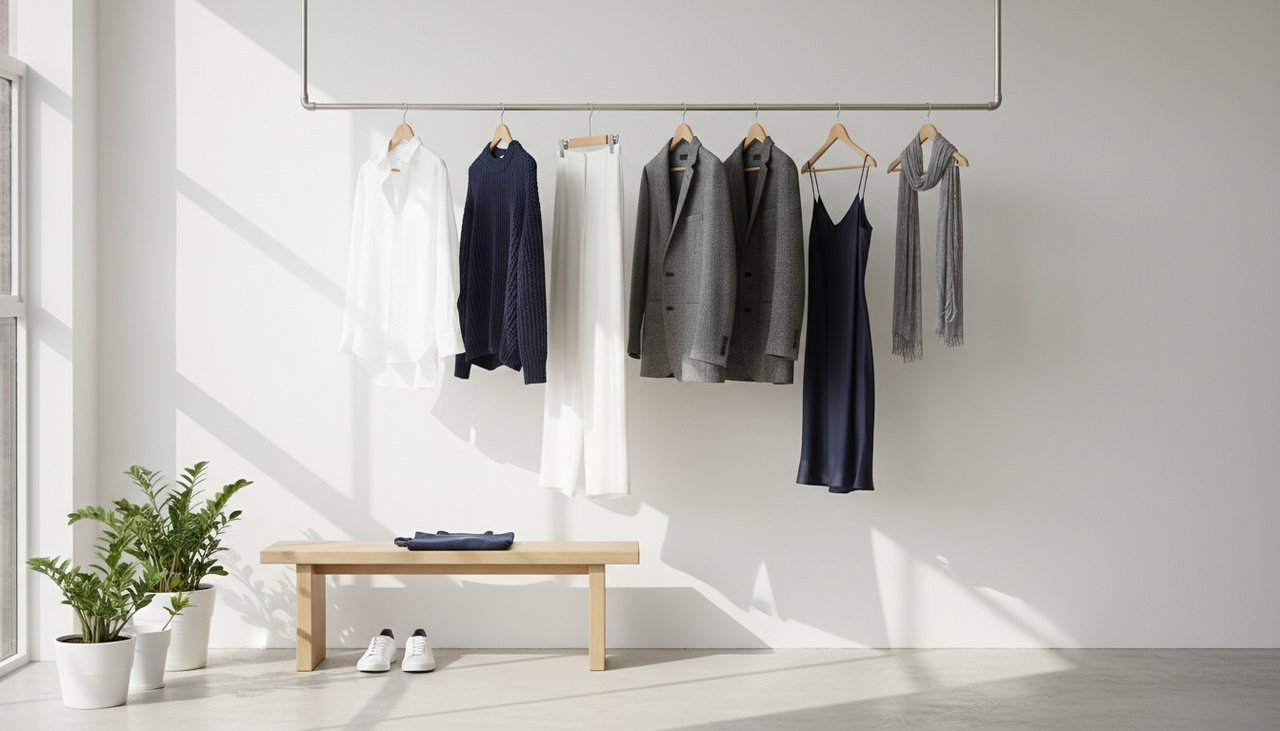
This kind of formula won’t fit every office the same way, and the exact numbers matter less than the underlying idea. In client-facing or more formal settings, shirts and a blazer may carry more of the outfit and be less optional; in casual or creative offices, one slot in the rotation might hold more texture or a quieter print. Treat the list above as a starting point to adapt, not a fixed rule — and when in doubt, defer to what your specific workplace actually expects.
Fit is worth spending time on before settling into a formula. The same style of trouser can read differently depending on the cut and on how it’s tailored, and preferences vary from person to person. Trying a couple of cuts before committing to several pairs of the same one can help you avoid ending up with items that technically match the plan but that you don’t actually reach for.
None of this requires special equipment or extra steps in the morning — the goal is simply that the pieces in the rotation are ready to wear as they are.
Optional Finishing Details
On the wooden surface of a dresser, a few small items might sit in a dish — a watch, a pair of hoop earrings, maybe a bracelet or two. Jewelry can work as one of these optional finishing touches, since a small, consistent set of pieces can be added at the end of getting dressed. Because pieces worn often can pick up everyday residue over time, it can help to know how to clean jewelry at home as part of general upkeep.

A bag by the door, already set with what’s needed for the day, is another way to reduce last-minute choices. Whether jewelry is part of that routine at all is entirely a matter of personal preference and, again, whatever is appropriate for a given workplace — some people add a piece or two most days, others skip it entirely, and either is a reasonable default to land on.
The point of a formula like this is that fewer choices need to be made in the moment, not that the assembly happens without any thought at all.
It is 7:42 AM. On a day when the formula is in place, there is less to sort through before making a choice — though the exact experience varies by person and by how the closet is organized.
There may be less back-and-forth and less to sort through before the day starts. For anyone this resonates with, the shift doesn’t have to be complete or permanent — it’s a way of simplifying one recurring decision.
If the closet still feels crowded tomorrow, one option is to change a single variable rather than the whole system: pick one reliable outfit, wear it, and see whether it’s worth repeating. A smaller, more consistent rotation is one possible way to make weekday mornings a little more predictable — not a fix for every wardrobe or every schedule, but a starting point worth testing against your own routine.