

Many people who work out before heading into the office run into a familiar pattern: a locker door swings open, cold fingers fumble with a small metal clasp, and an earring back slips loose, rolling across the floor. Retrieving it can mean a few minutes spent searching a gym locker room before the day has even started. This kind of friction comes up whenever jewelry choices and a schedule that moves between exercise and work collide.

Jewelry Graveyard
A jewelry organizer filled with pieces that once seemed versatile can turn out to be a collection of items that don’t suit an active schedule. A layered necklace, larger hoops, or rings may be less convenient for some activities, depending on the movement and equipment involved. If you notice rings green finger marks or irritation, check the stated material and stop wearing the piece if needed. Pieces chosen with a body at rest in mind don’t always suit moments of higher activity, which is part of why some people rethink what they wear day to day.
Planning for Different Activities
One consideration is how much time goes into putting jewelry on and taking it off throughout the day. This can shift the focus from making a statement to choosing pieces that require less handling, where the material and overall design matter as much as the look.
A routine can involve different jewelry choices at different times of day.
What Works
Material and finish are worth checking, but neither should be treated as a guarantee of performance in sweat, water, or chemicals. Care needs differ by construction and surface treatment. If you need to silver jewelry clean, follow the care guidance for the particular piece. Removing jewelry before swimming, cleaning with chemicals, or other water exposure is a cautious step.
Titanium is sometimes distinguished from “surgical steel,” another material commonly used in jewelry marketed for active wear. Some surgical steel alloys contain nickel, which can be a consideration for people with sensitive skin, particularly with prolonged, sweaty contact. Anyone concerned about skin reactions should check the specific alloy, surface treatment, and product information rather than assuming one metal category behaves the same as another.
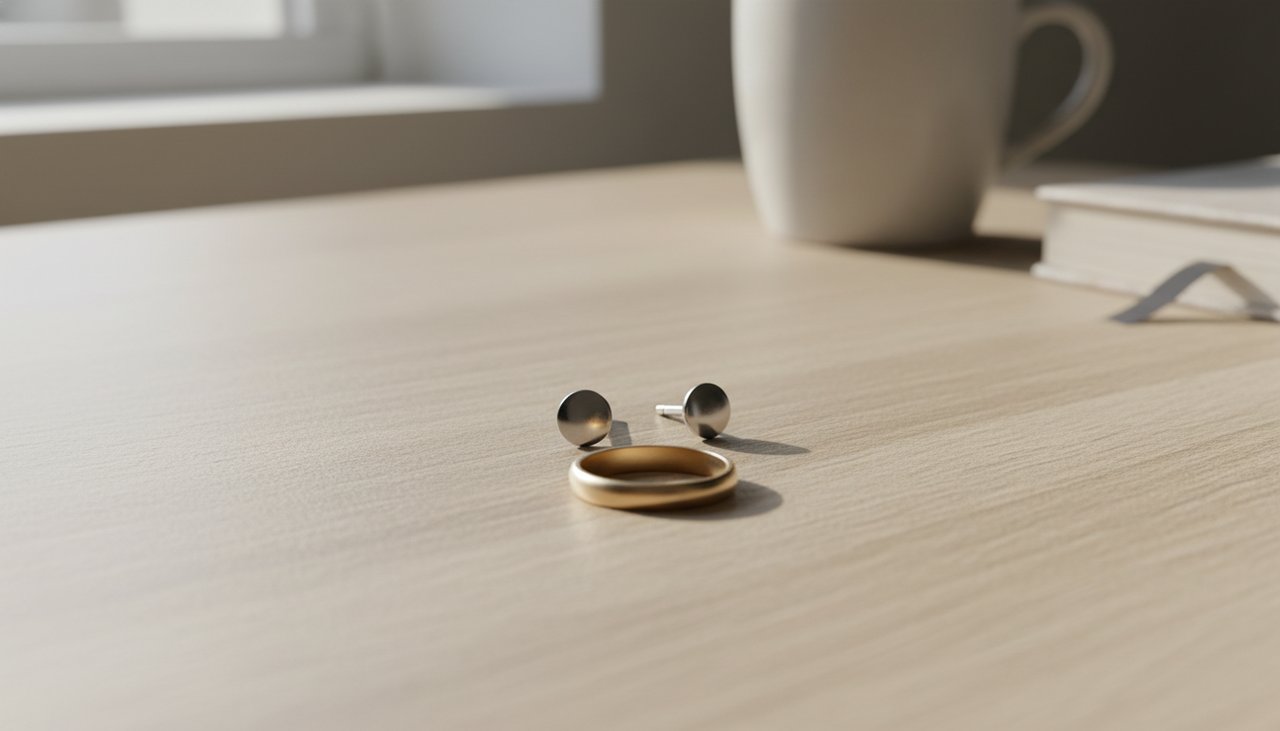
Hardware choices come into play as well. Flat-back labrets are one alternative to traditional butterfly backs, differing mainly in how the back piece is shaped and sits against the skin.
What is a flat-back labret? It is an earring where the back is a flat disc rather than a pointed butterfly clasp. The disc sits against the skin behind the earlobe, without a protruding post. The front piece typically attaches through a threadless push-pin mechanism, which allows it to be changed without additional tools. Flat-back labrets originated in body piercing and are now also used more broadly in jewelry marketed for extended wear, though how any given piece holds up through sleep, exercise, or other movement can vary by design and manufacturer.
Some of the criteria people use when selecting pieces for this kind of routine include:
- Small studs that sit flush against the earlobe.
- Smaller hoops, if their shape suits the activity and your own preference.
- Chain styles chosen with the planned activity in mind.
- Ring profiles with fewer raised details, if that suits the activity and your preference.
Getting an accurate find ring size measurement is also part of choosing rings for an active schedule, since a ring that’s too loose or too tight can behave differently during movement. The same general criteria that suit a gym environment can also apply to an office setting. A smaller stud or simple band may suit a restrained office look, while other people may prefer to change jewelry between activities. Styling choices remain personal.

Reducing the number of times jewelry has to come on and off is one way some people try to simplify a schedule that moves between a gym and an office. Even so, for strenuous exercise, contact with chemicals, exposure to water, or activities with a real risk of snagging, considering whether to remove jewelry beforehand is worth doing, regardless of how any particular piece or material is marketed.
Before an activity, look at the movement involved, the equipment you expect to use, and whether the piece has loose or raised details. That brief check does not predict every outcome, but it can help you decide whether to put the piece aside until the activity is over.