

Whether diamond jewelry is suitable for frequent wear depends on the stone, the setting, the metal, and the activities around it. A diamond’s well-known hardness is only one part of that decision.
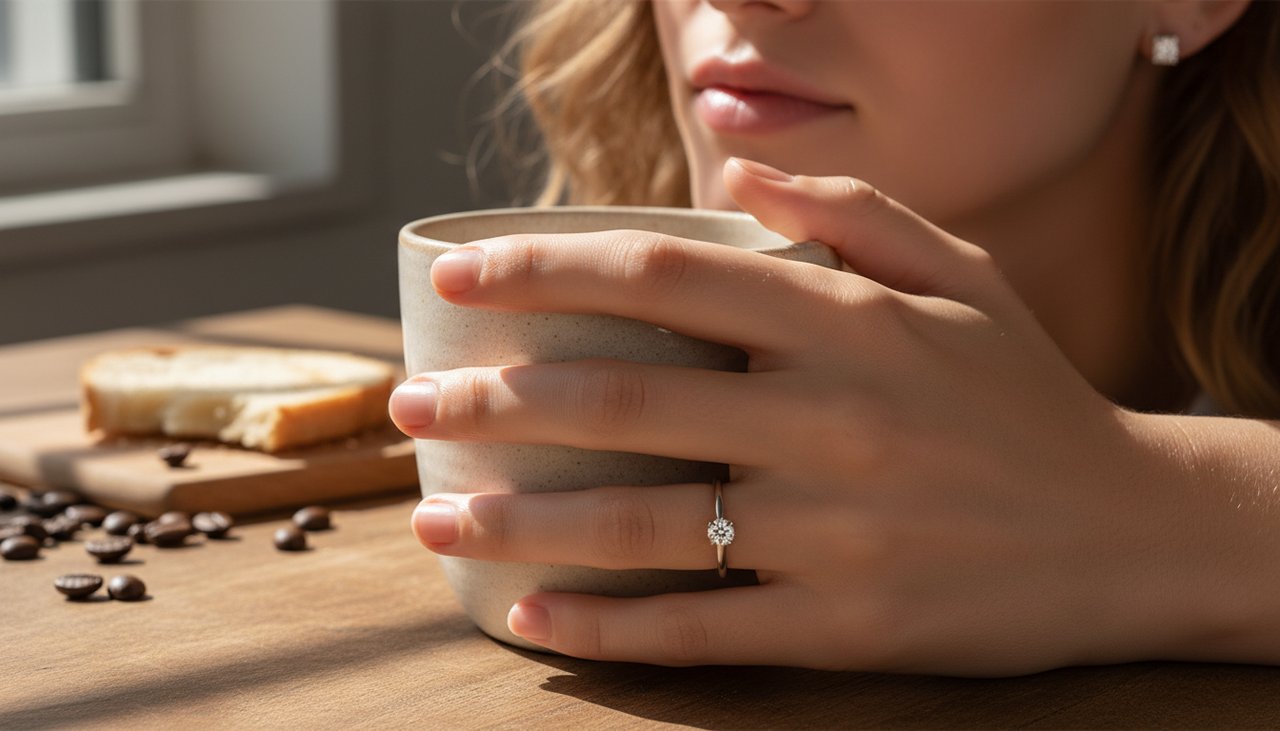
Diamond jewelry can be worn in many settings, but frequent wear does not remove the need to check the stone, mounting, and finish. Consider the individual piece rather than treating any diamond item as automatically suited to every activity.
Rather than treating daily wear as a test of durability, it is more useful to understand the limits of a particular piece and choose care accordingly.
Hardness, toughness, and setting security are different parts of a diamond jewelry decision.
Real Risks
Many assume that because diamonds rank highest on the Mohs hardness scale, they are indestructible. Hardness only measures resistance to scratching, not resistance to a sharp knock. That second property is called toughness, and diamonds are not especially tough: they possess internal grain lines where atomic bonds are weaker, known as cleavage planes. Think of these like the grain in a piece of wood.
A sharp knock at the wrong angle against a metal door handle can cause a stone to chip or crack along these internal lines. The force of a sudden impact travels directly through the rigid structure. Separate again from hardness and toughness is setting security — how firmly the mounting holds the stone in place, which depends on the construction of the particular piece rather than on any property of the stone itself.
Traditional prong settings leave the edges of the stone exposed to the world. A bezel setting is one structural option some people consider for a more active lifestyle, since a bezel wraps the perimeter of the diamond in a rim of metal that covers more of its edge than open prongs do.
That metal rim sits between the stone’s edge and the outside world, so a portion of an impact is met by the metal rather than by the diamond’s exposed edge. This changes how contact reaches the stone, though it does not by itself determine whether a given stone will chip, crack, or come loose.
Invisible Enemies
Cleaning products, pool water, cosmetics, and other substances can affect a jewelry finish or mounting. Remove a piece before activities that may expose it to harsh products, and use the maker’s care instructions when available.
Inspect a diamond setting periodically for a loose stone, bent prong, or visible change. If you notice a concern, stop wearing the piece and ask a qualified jeweler to examine it rather than trying to adjust the setting at home.
How Your Diamond Loses Its Fire
If a diamond looks less bright, surface residue may be one possible cause, but appearance alone does not identify the condition of the stone or setting.
For a known setting and material, follow the maker’s instructions before choosing a method to clean jewelry at home. Avoid treating a change in appearance as proof that a particular cleaning method is suitable.
For an unknown finish, a delicate setting, or a piece with multiple materials, ask a jeweler before soaking or brushing it. A cautious method matched to the piece is preferable to a universal recipe.
Do not assume that a cleaning device or chemical method is appropriate for every setting. If you cannot confirm the construction and care guidance, professional cleaning is the more cautious option.
Before You Choose
Before buying a diamond piece for frequent wear, read the product information for the setting type, metal, stone treatment, and care instructions. A close product photo can show the overall design, but it cannot confirm whether a stone is secure or whether a particular finish will suit a particular routine.
Ask the seller what care is appropriate for that exact piece, especially when the listing includes pavé details, a plated finish, mixed materials, or a design with exposed edges. Keep any care guidance with the purchase record so that you can refer to it before cleaning or repair.
Frequent wear also makes simple observation useful. Check for changes in the way a stone sits, unusual movement, bent metal, or a clasp that no longer closes as expected. These observations do not diagnose a problem, but they are good reasons to pause and seek an inspection.
Choosing for Life
If you want less of a stone’s edge exposed, a bezel or channel setting is one structural feature to consider. It does not eliminate impact or setting risk, and the condition of the individual piece still matters.
Band profile can change how a ring sits on a finger, but there is no universal fit outcome. Check the dimensions and the seller’s sizing information for the specific design.
Styling these pieces for casual wear is a matter of balance. A commonly suggested approach for daily layering favors mostly plain, minimal metal, with diamond accents used more sparingly. This kind of balance can help jewelry feel appropriate for both the grocery store and the office, even when you decide to stack bracelets or pair pieces with a simple jewelry black outfit for a cohesive, understated look.
Keeping the majority of your look focused on clean, bare metal allows the diamond accents to stand out naturally. It grounds the arrangement, turning a formal piece into something you can wear more often. Jewelry is meant to be worn, not just stored in a box.
Removing a ring before chores or activities that may involve impact, chemicals, or snagging is a cautious habit. The most useful approach is to understand the stone, setting, and care guidance for the individual piece.